Residual ranges
Free chlorine 0–10 ppm; monochloramine 0–5 ppm. Agree the operating mode and separate reference methods.
Black self-cleaning monitoring for monochloramine and free chlorine in suitable chloraminated water.
MP6 is the black Halogen sensor for monochloramine and free-chlorine measurement in suitable chloraminated water. Its operating modes and reference calibration help the team work with the residual actually used by the process.
Review pH, ORP, conductivity and temperature alongside the disinfectant readings. These supporting measurements provide context; they do not identify every cause of a change on their own.
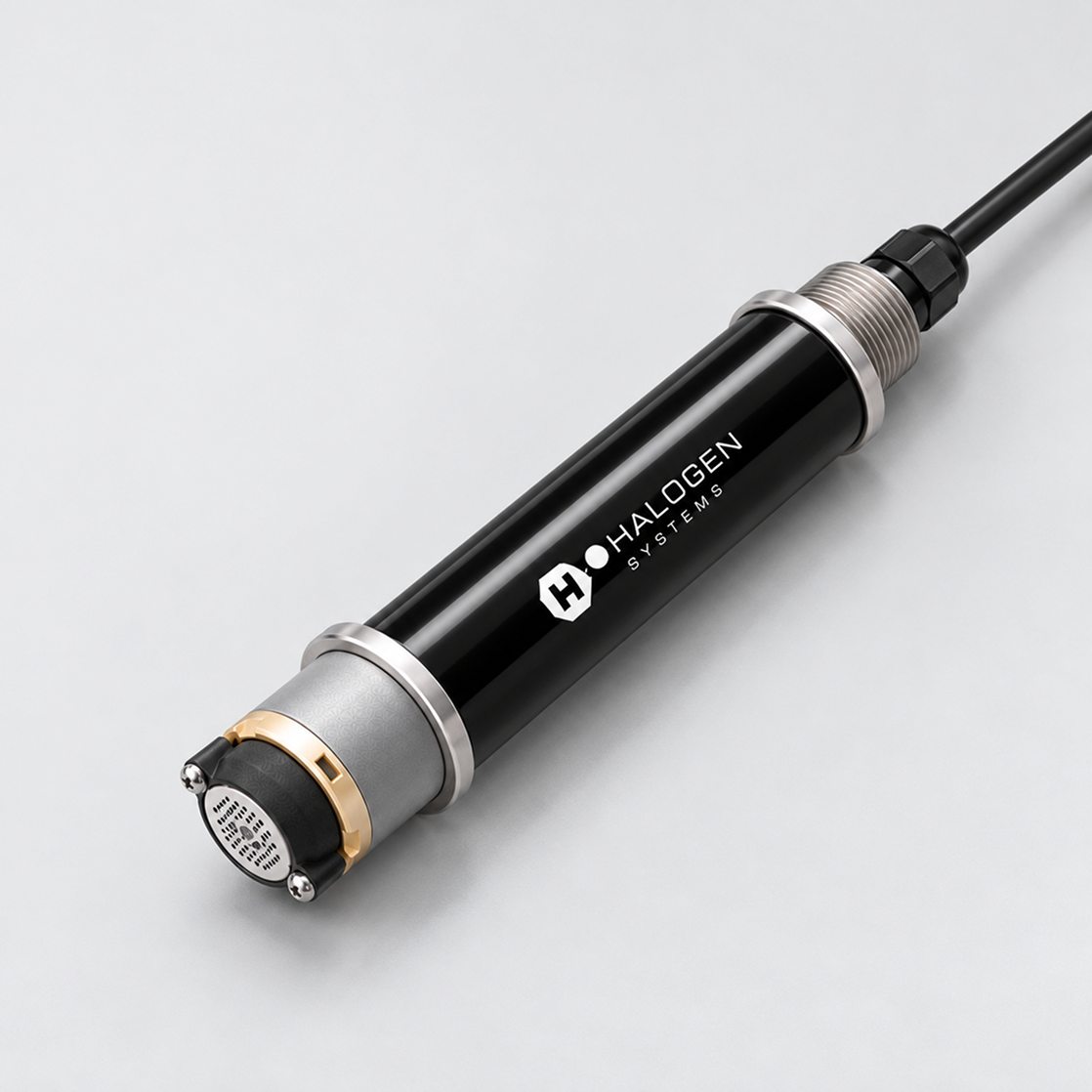
A small motor drives a magnetically coupled impeller. Its movement circulates water at the sensing end and agitates cleaning beads across the measuring surfaces.
The beads help keep the electrodes and pH element clean while the sensor works. Electrochemical cleaning supports the mechanical action. There are no analysis reagents to replenish and no sensing membrane or electrolyte to replace.
This local movement supports measurement at low bulk-flow velocities. The sensor still needs representative water, a suitable installation and planned reference checks.
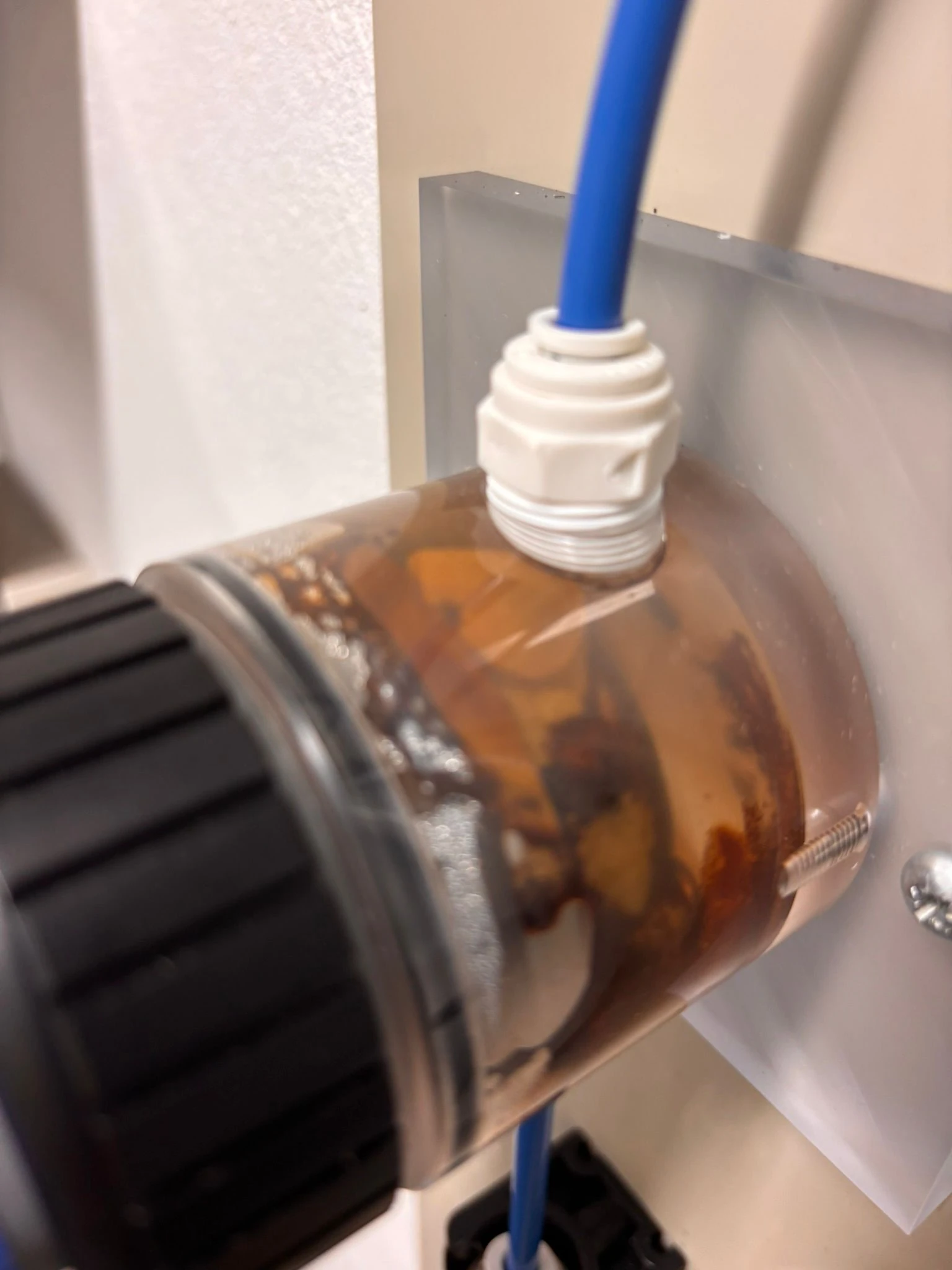
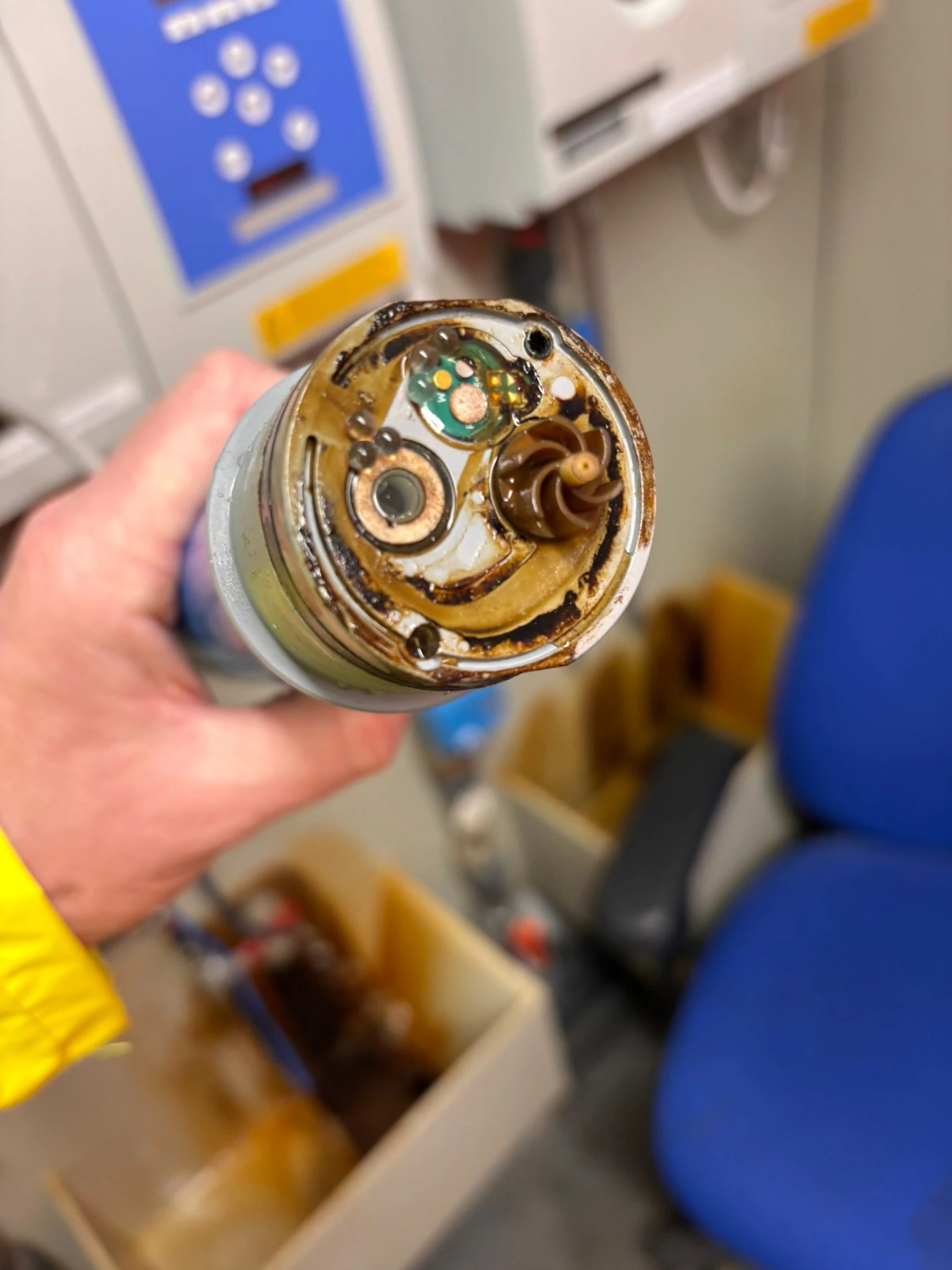
Iron-rich water can leave heavy deposits on a sensor. Halogen’s continuous self-cleaning helps keep the measuring surfaces working, reducing routine cleaning in challenging conditions.
These photographs show an MP5 after five months in high-iron borehole water, without cleaning, recalibration or other intervention during the published trial.
These photographs show the MP5 trial and the shared self-cleaning principle.
Discuss your application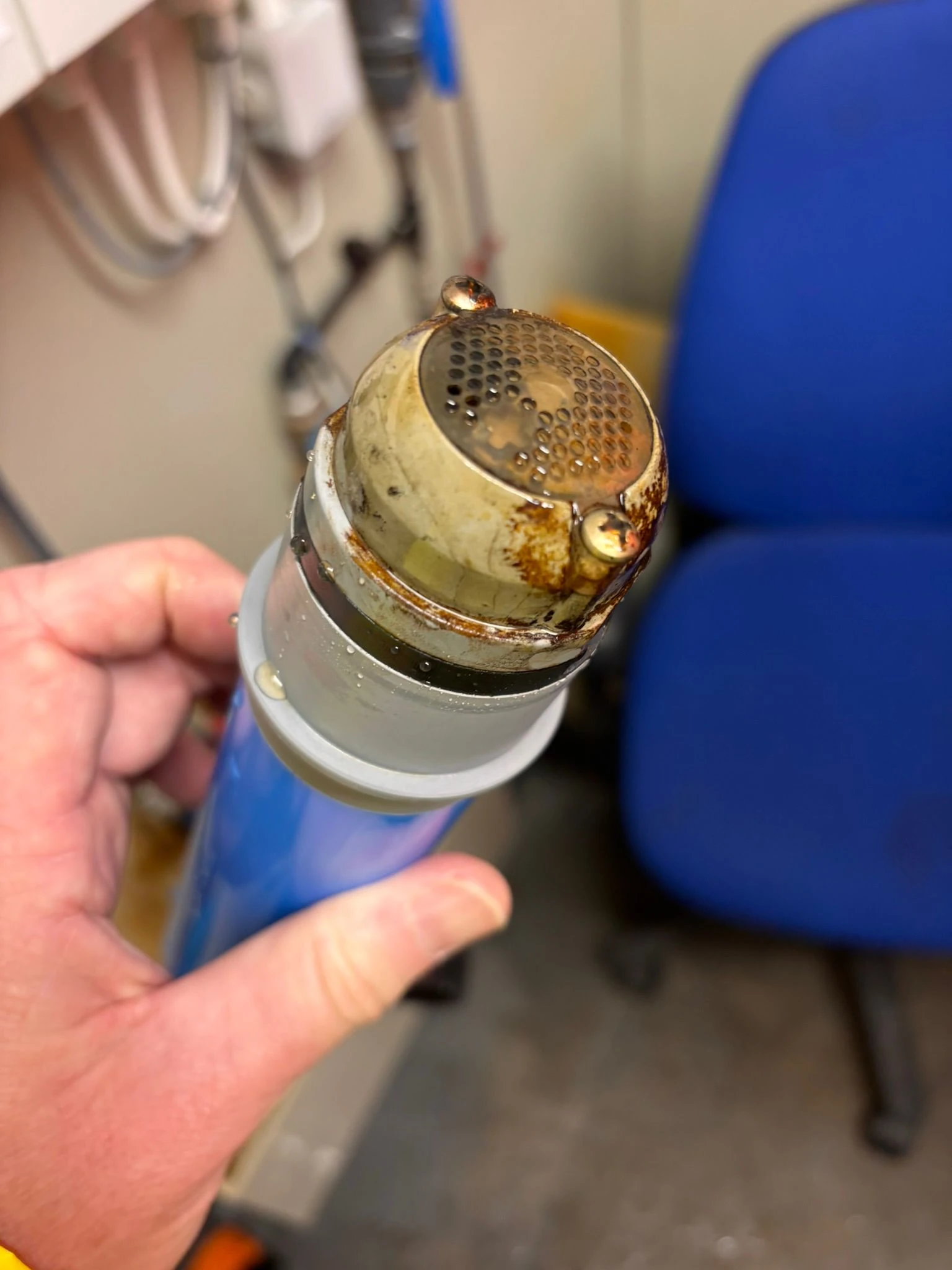
Model-specific values from the supplied MP6 guide. They differ from MP5 and from other Halogen sensor families.
Free chlorine 0–10 ppm; monochloramine 0–5 ppm. Agree the operating mode and separate reference methods.
Nominal 120-second interval in the specification. Mono-only configuration has a different cycle described in the guide.
Chlorine sample pH 7.5–9.0 and conductivity 150–2,000 µS. Review suitability across your expected operating conditions.
5–55°C sample temperature; published pressure limit 10 bar, subject to the mounting and installation rating.
24 V DC ±10%; 50 mA operating with 200 mA maximum startup. Connect through a compatible controller or reviewed PLC arrangement.
Typical six-month calibration stability, with calibration checks at least every six months and care directed by the model guide.
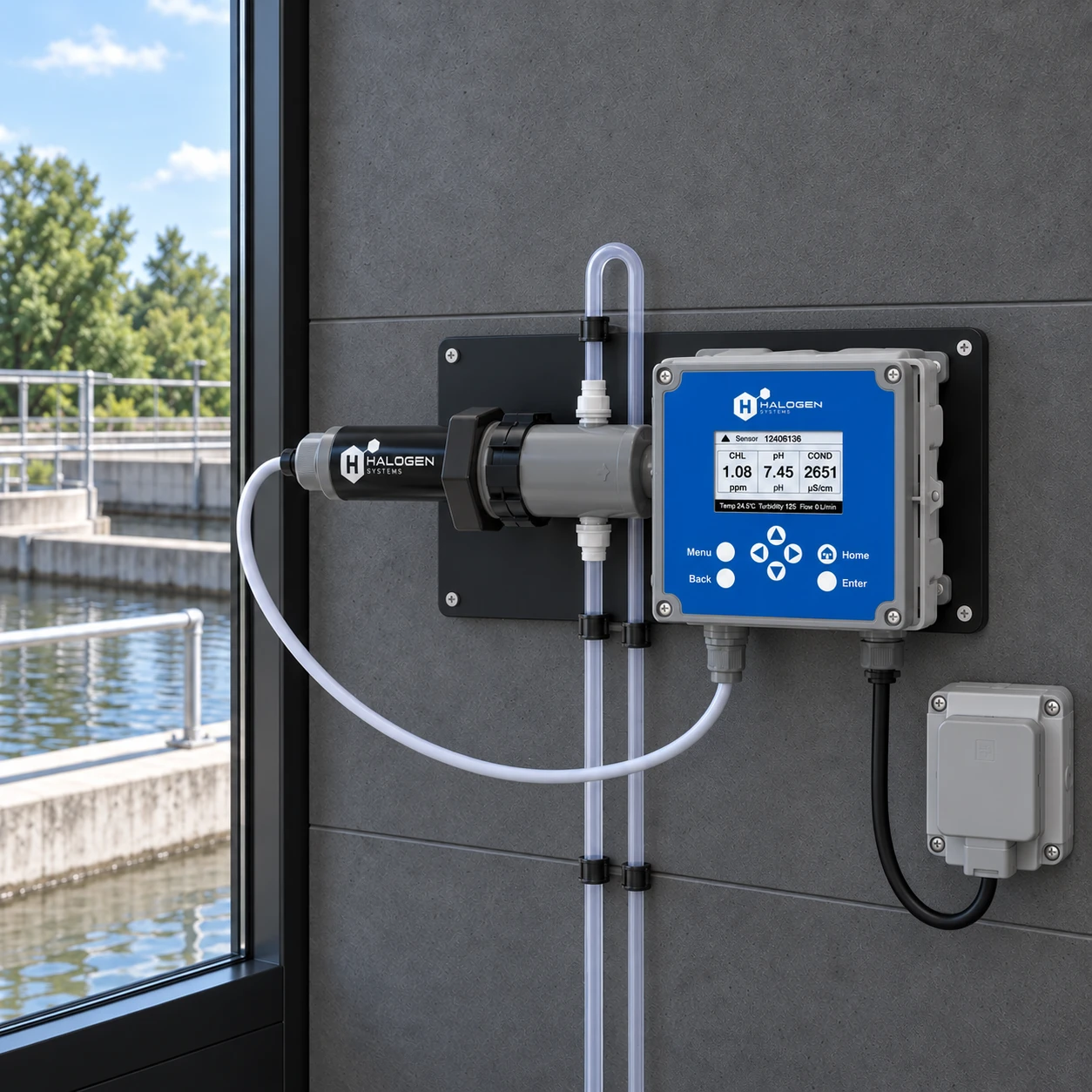
Record which residual is being measured, the configured mode and the location represented. Compare each channel with the corresponding reference method rather than treating all chlorine tests as equivalent.
A change in monochloramine may need investigation alongside free chlorine, pH, temperature and separate nitrogen measurements. MP6 does not measure nitrate or nitrite.
Read the manufacturer product guides for installation, operation, calibration and model-specific limits.
The supplied MP5 guide uses the MP5A model designation. PMA presents this model as MP5.
Operating modes, reference calibration, installation requirements and technical specifications.
No. This page follows the supplied MP6 guide for free-chlorine and monochloramine monitoring. Do not transfer its specification to MP Total; PMA will confirm the exact model for your application.
The guide describes reference calibration for monochloramine and free chlorine, including a procedure for treated water containing both. Follow the stated mode and reference-method instructions.
D20 displays the configured sensor readings and provides local setup, records and site interfaces. PMA will confirm firmware compatibility, loading and the outputs needed by your operators.
The reagentless measurement does not need analytical reagents, a sensing membrane or electrolyte. It still requires the reference checks and maintenance specified for the supplied sensor.
The impeller circulates water and agitates cleaning beads across the measuring surfaces. Electrochemical cleaning supports the mechanical action; this does not remove the need for inspection and servicing.
Share the expected free-chlorine and monochloramine residuals, water chemistry, temperature and pressure, monitoring location, power and required site signals. PMA can then review the model and installation together.
PMA connects the measurement, installation and operating team. We help you review the application, select suitable instrumentation and plan commissioning, training and ongoing service.
Start with your water chemistry. Choose the installation and connections, then see how your sensor and controller work together.
Tell us about your disinfectant, water chemistry and installation. PMA can help you work through the sensor, controller and integration requirements.
Brook Mills House, Carr Lane
Slaithwaite, Huddersfield, HD7 5BG