Measurement
Total chlorine: free and combined chlorine in the water.
Black self-cleaning chlorine monitoring for the total residual in your water.
Total chlorine includes free chlorine and combined chlorine. Choose the black MP Total sensor when the total residual is the measurement your operators need to follow.
Continuous self-cleaning and reagentless measurement support routine monitoring. PMA will confirm the total-chlorine model, range and suitability for your water chemistry, then match the installation, D20 controller and site outputs.
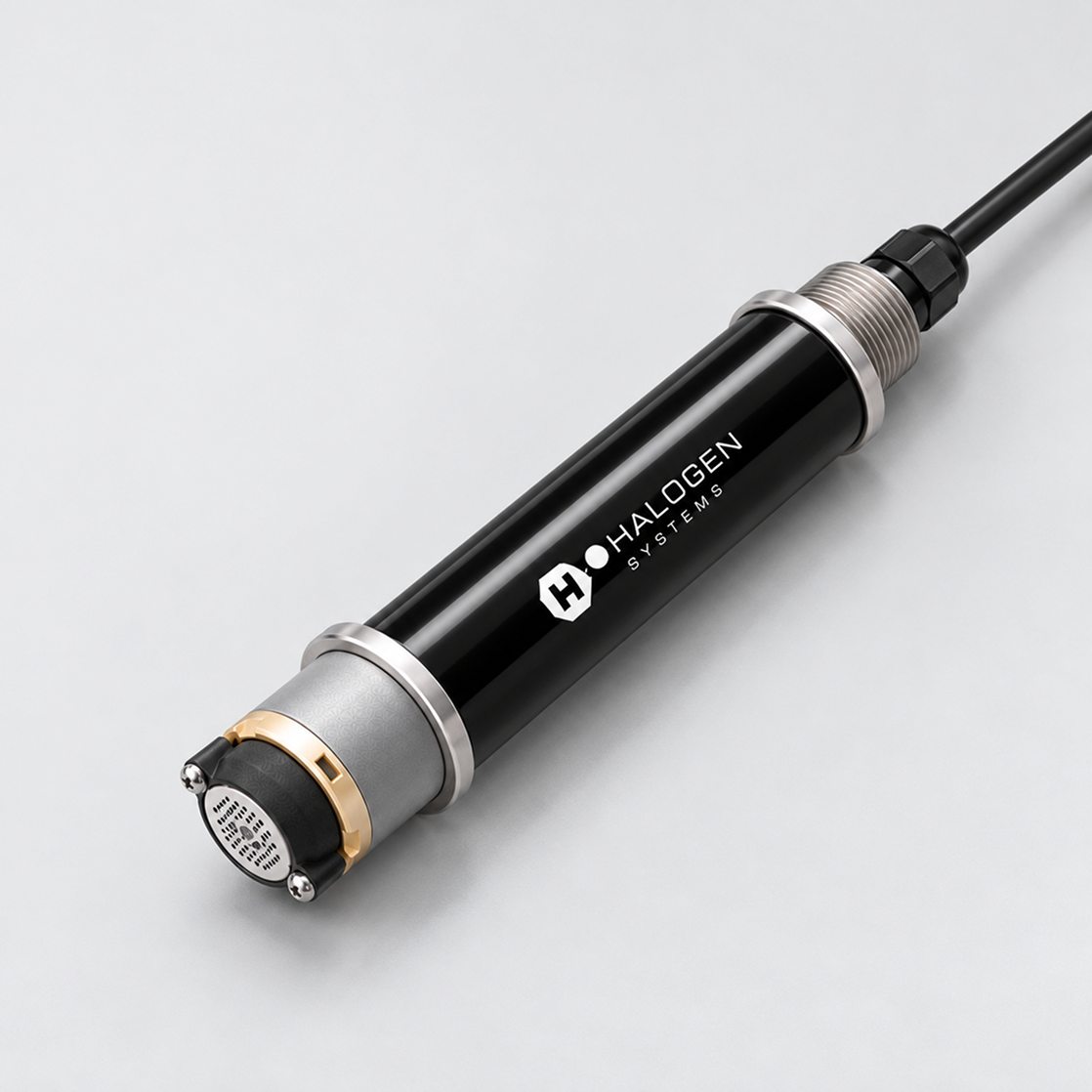
A small motor drives a magnetically coupled impeller. Its movement circulates water at the sensing end and agitates cleaning beads across the measuring surfaces.
The beads help keep the electrodes and pH element clean while the sensor works. Electrochemical cleaning supports the mechanical action. There are no analysis reagents to replenish and no sensing membrane or electrolyte to replace.
This local movement supports measurement at low bulk-flow velocities. The sensor still needs representative water, a suitable installation and planned reference checks.
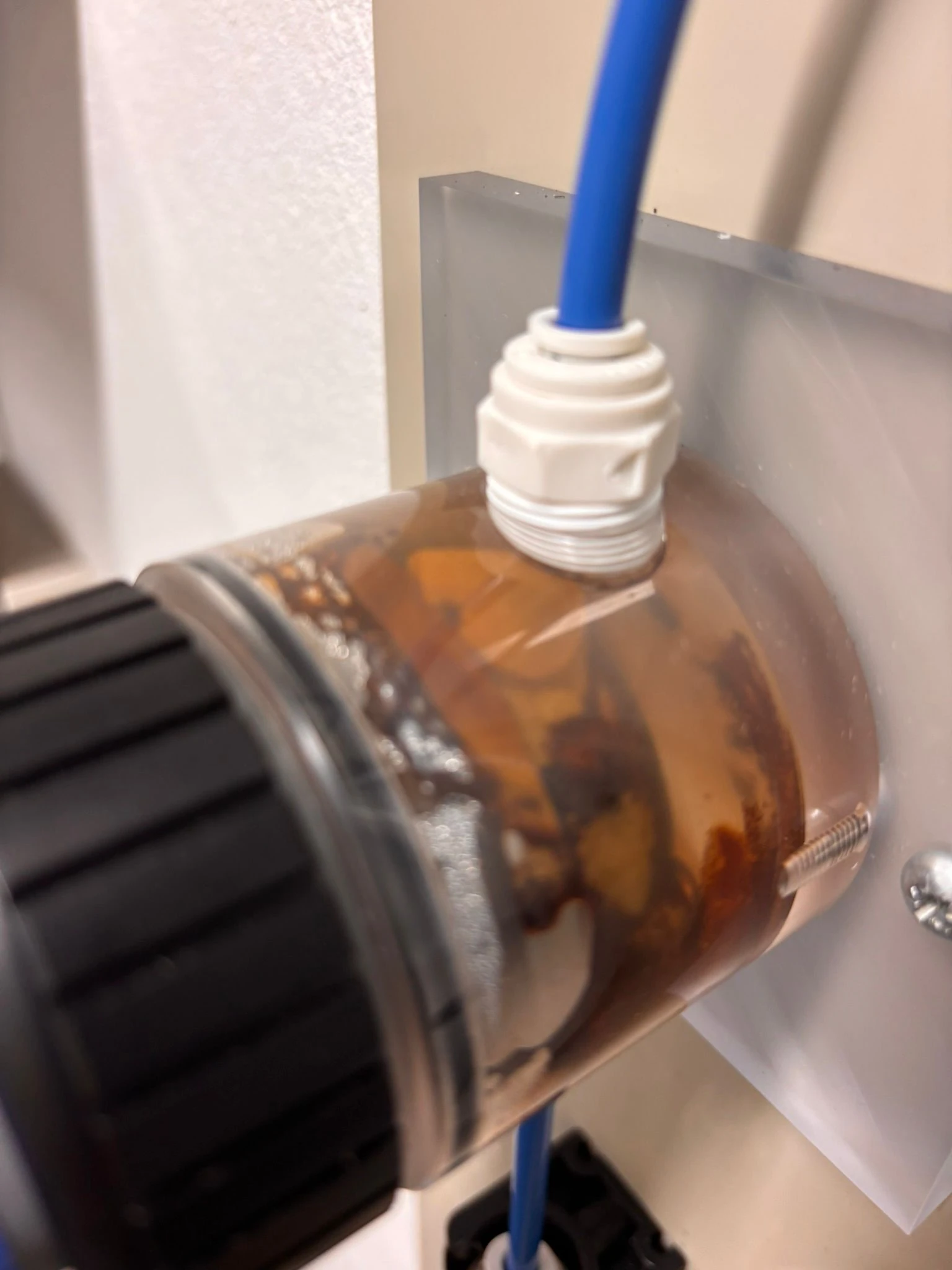
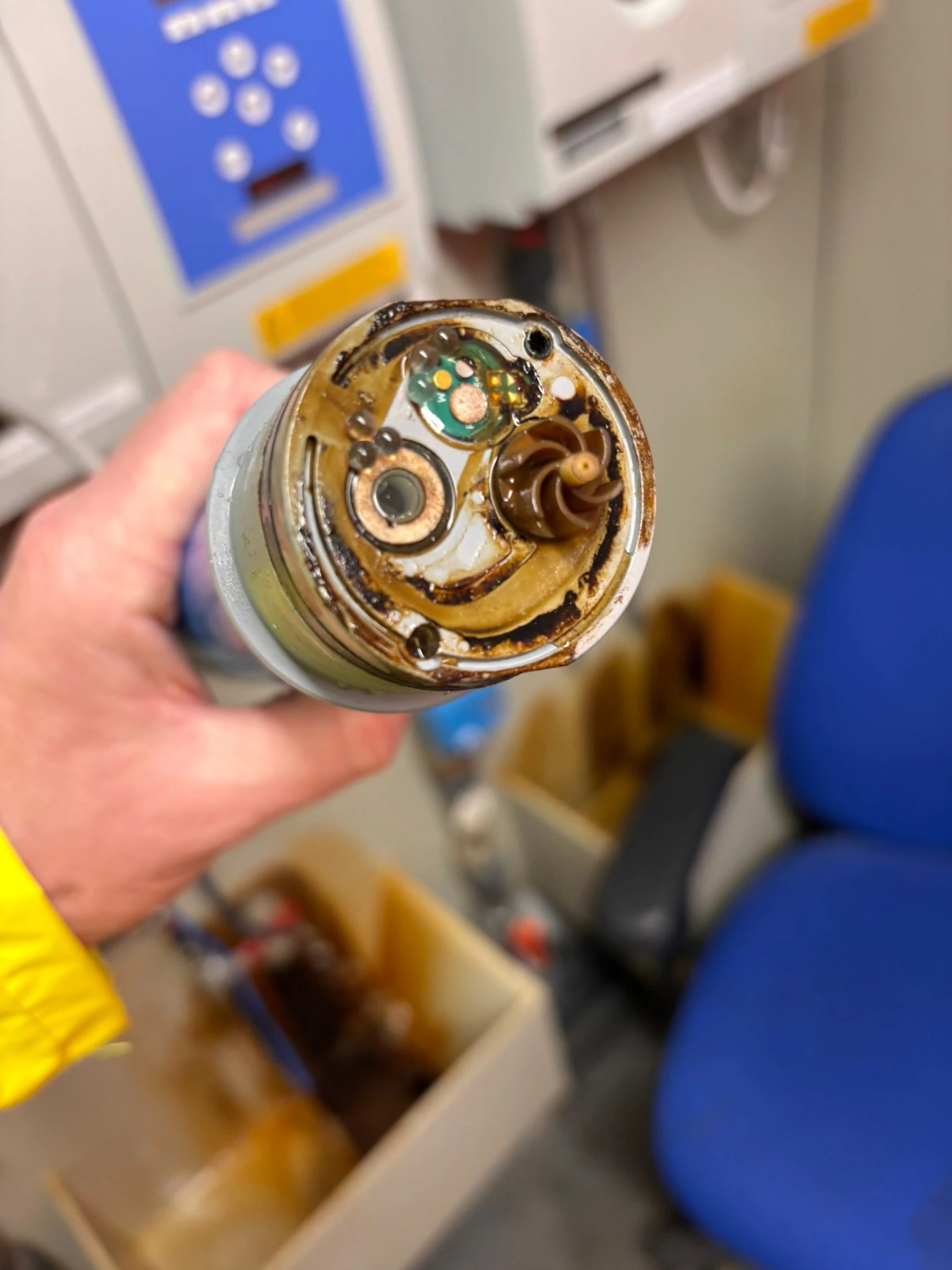
Iron-rich water can leave heavy deposits on a sensor. Halogen’s continuous self-cleaning helps keep the measuring surfaces working, reducing routine cleaning in challenging conditions.
These photographs show an MP5 after five months in high-iron borehole water, without cleaning, recalibration or other intervention during the published trial.
Discuss your application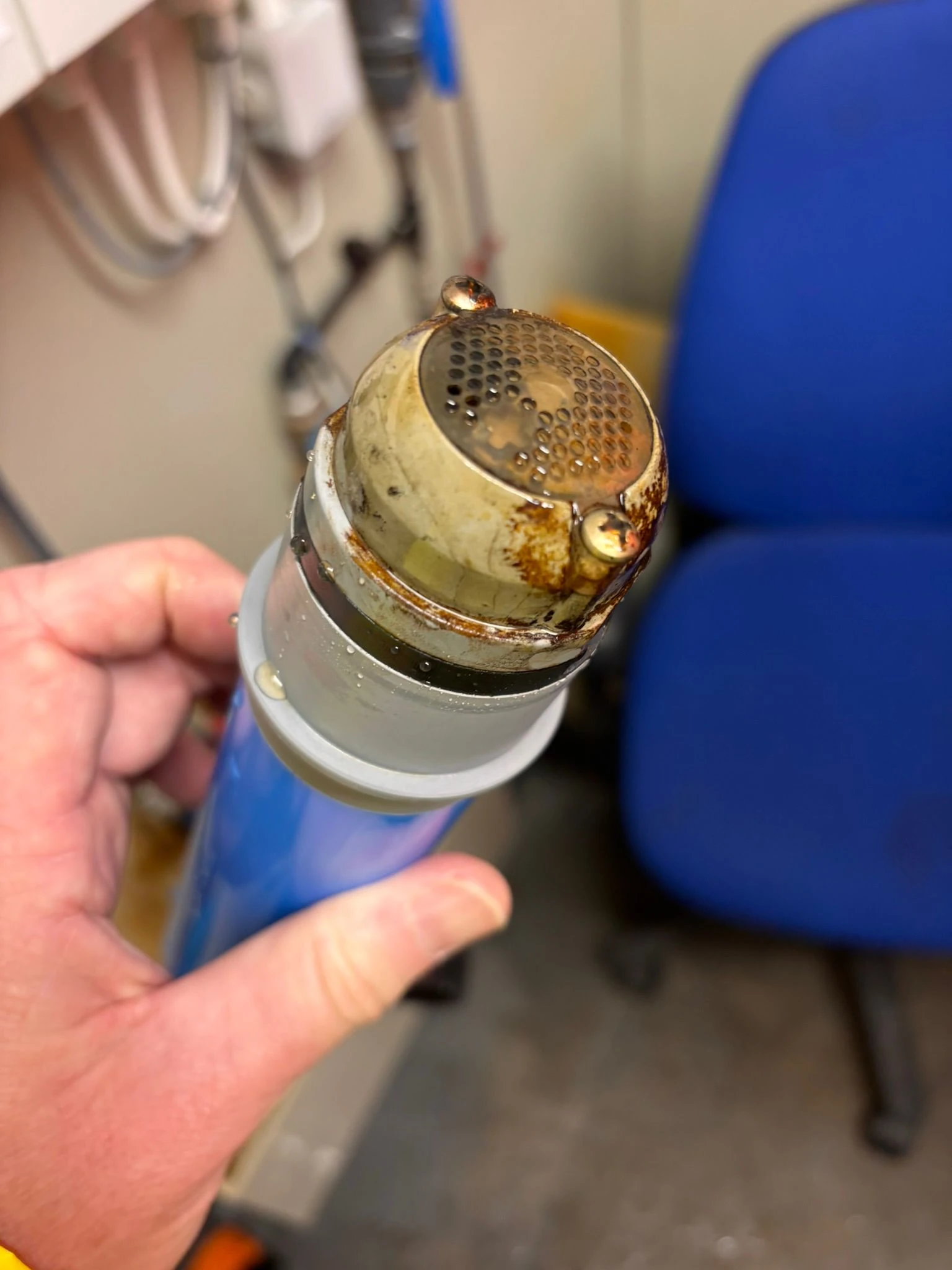
Total chlorine: free and combined chlorine in the water.
Confirm the total-chlorine variant and required range with PMA.
Integrated cleaning helps keep the measuring surfaces clear during operation.
Provide expected residual, pH, conductivity, temperature and pressure.
Choose a representative monitoring point and appropriate mounting accessories.
Review D20 integration, available power, site signals and planned reference checks.
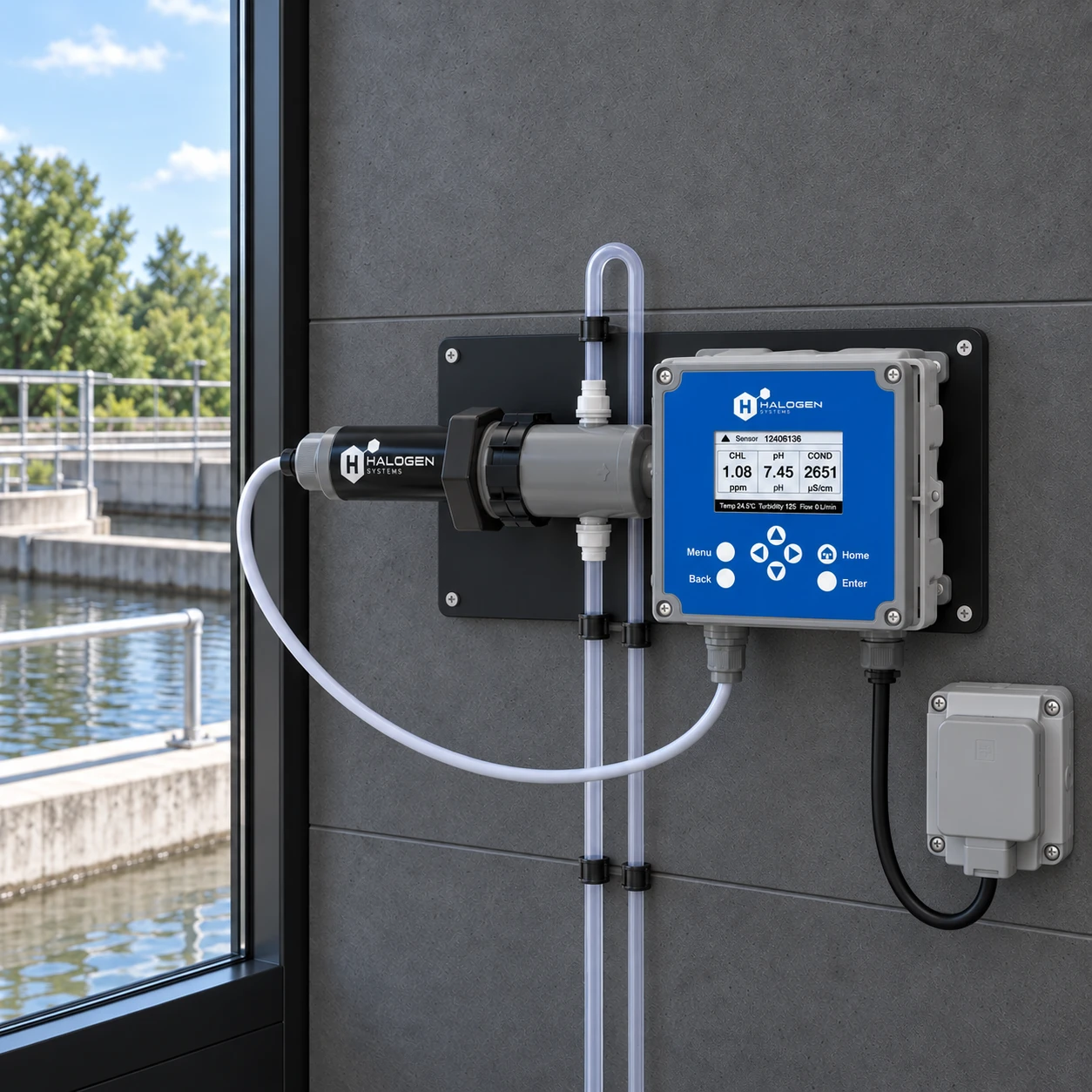
At a works, decide whether the reading is intended to describe a particular treated-water outlet, a blend or another process point. At a reservoir, relate it to the inlet, outlet or immersed location.
Choose a flow cell, in-pipe fitting or immersion arrangement that suits the sensor variant. Include isolation, drainage, sample transit time and maintenance access in the site review.
Practical guidance for choosing the monitoring point and using the resulting trend.
Follow a defined treated-water point, reference checks and signal quality.
Connect residual trends to inlet, outlet and storage operating conditions.
Keep monochloramine and free-chlorine trends in a clear investigation record.
PMA will confirm the model-specific total-chlorine specification and compatible controller for your application.
Free chlorine, total chlorine and monochloramine answer different monitoring questions. Total chlorine includes free and combined chlorine; a monochloramine measurement follows one specific combined-chlorine species.
Total chlorine includes free chlorine and combined chlorine in the water. MP Total is the option on this page for operators who need to follow that total residual.
A total-chlorine value does not identify monochloramine on its own. Monochloramine is one specific combined-chlorine species; agree the measurements and exact sensor variant with PMA.
No. The sensing approach avoids analytical reagents, membranes and electrolyte, but the installation still needs planned reference checks, inspection and model-specific servicing.
A motor-driven impeller circulates water and moves cleaning beads across the measuring surfaces. Electrochemical cleaning supports the mechanical action during operation.
Review an appropriate flow cell, in-pipe fitting or immersion arrangement for the supplied variant. Include representative water, isolation, drainage and maintenance access in the site assessment.
Confirm the total-chlorine model and range, water chemistry, monitoring location, power and site signals. PMA will then review the compatible controller, mounting accessories and verification plan.
PMA connects the measurement, installation and operating team. We help you review the application, select suitable instrumentation and plan commissioning, training and ongoing service.
Start with your water chemistry. Choose the installation and connections, then see how your sensor and controller work together.
Tell us about your disinfectant, water chemistry and installation. PMA can help you work through the sensor, controller and integration requirements.
Brook Mills House, Carr Lane
Slaithwaite, Huddersfield, HD7 5BG