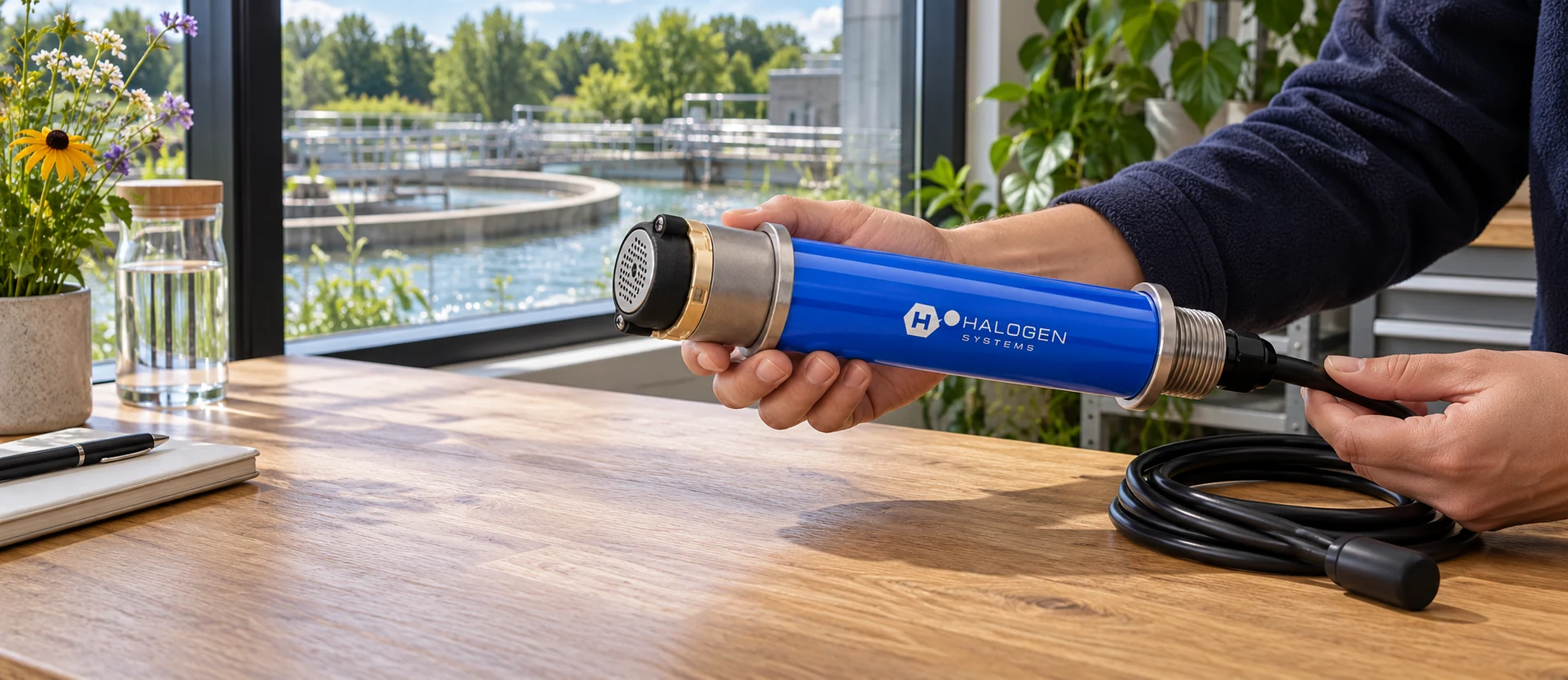
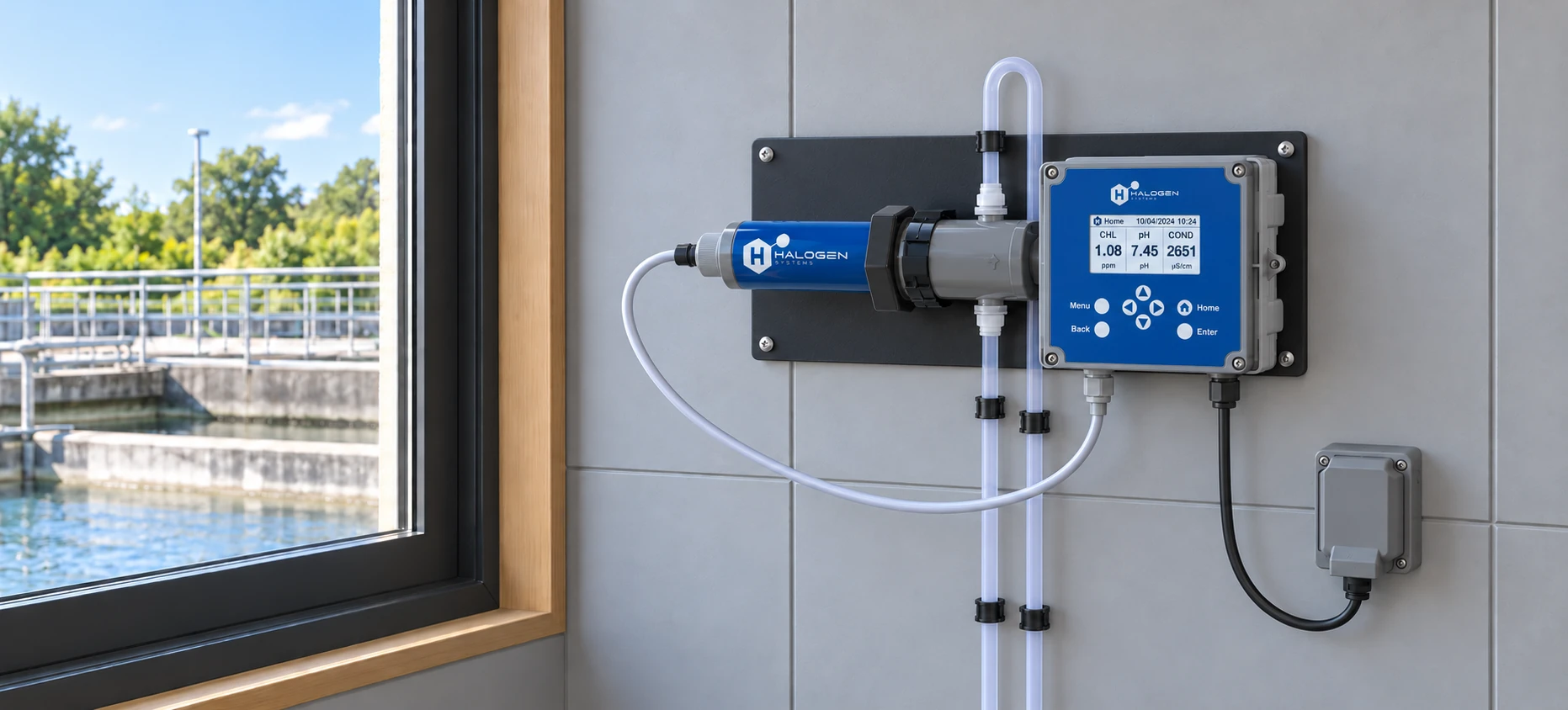
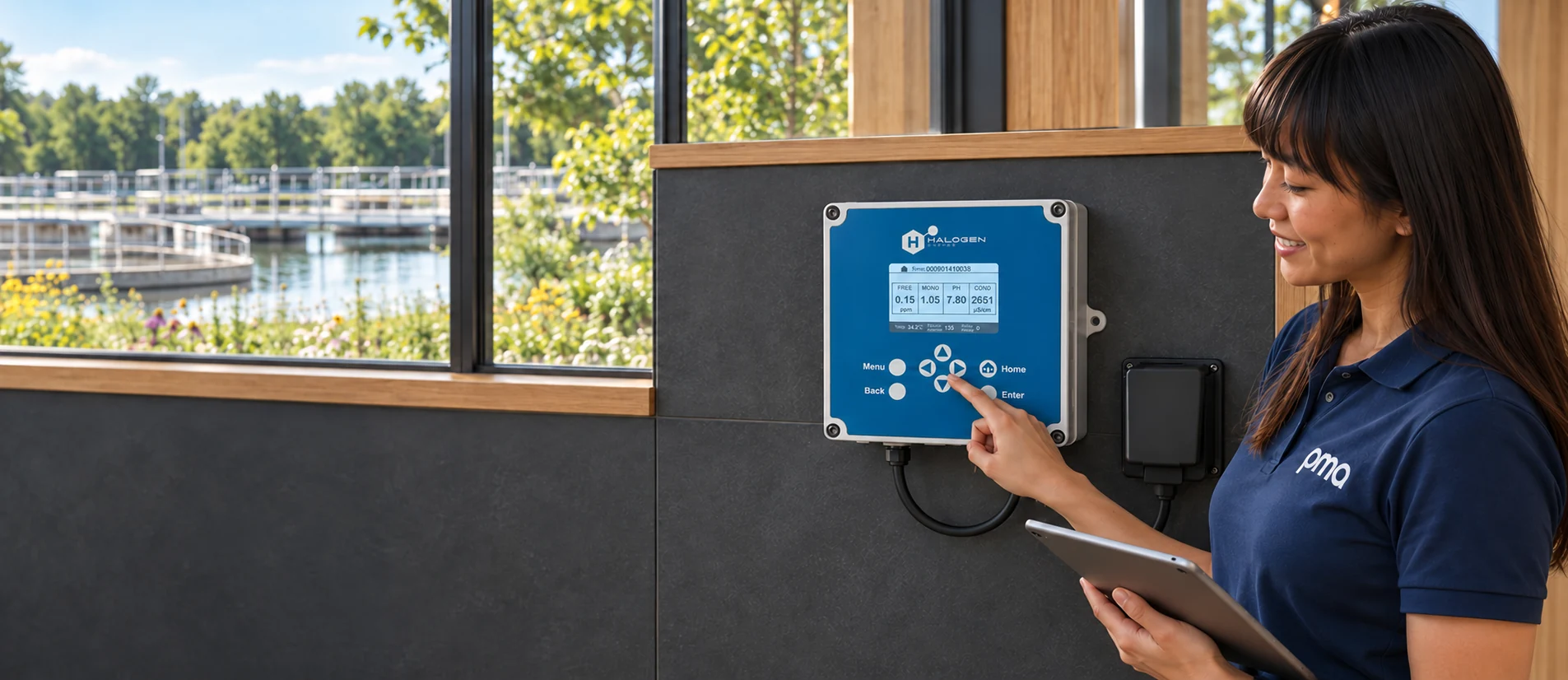
How Halogen combines reagentless amperometric chlorine sensing, mechanical cleaning and water-chemistry compensation. Explore the benefits and limits.
Reagentless measurement. A cleaner sensing surface. Useful water-quality context.
Reagentless electrochemical measurement
In amperometric chlorine measurement, an electrochemical reaction at the sensing electrodes produces a current related to the chlorine concentration. Halogen uses pulsed operating potentials as part of its measurement and surface-renewal approach. This is reagentless sensing: there is no continuous analytical reagent supply. The selected model determines the disinfectant measurements available.
Mechanical cleaning at the sensor
Integral circulation and captive cleaning media help remove deposits from the sensing surfaces. Together with electrochemical renewal, this addresses a common source of unreliable readings: a changing sensor surface.
Account for the water matrix
The response to chlorine changes with water chemistry. Integrated pH and conductivity measurements support compensation, while site reference checks remain part of commissioning and operation.
Flexibility without ignoring limits
Local circulation supports applications with variable or zero external flow within the selected model’s rated envelope. Pressure, temperature, chemistry and installation requirements still apply.
A practical maintenance story
Removing analytical reagents, membranes and electrolyte can simplify routine work. Cleaning media, wear parts, seals and pH components still need the appropriate checks and service.
Compare the complete operating workload
Look beyond reagent cost alone. Compare the sample-water path, cleaning and verification work, replacement parts, service access and integration into plant systems. The potential to reduce routine interventions is application-specific; it should be assessed against the site’s existing monitoring arrangements.
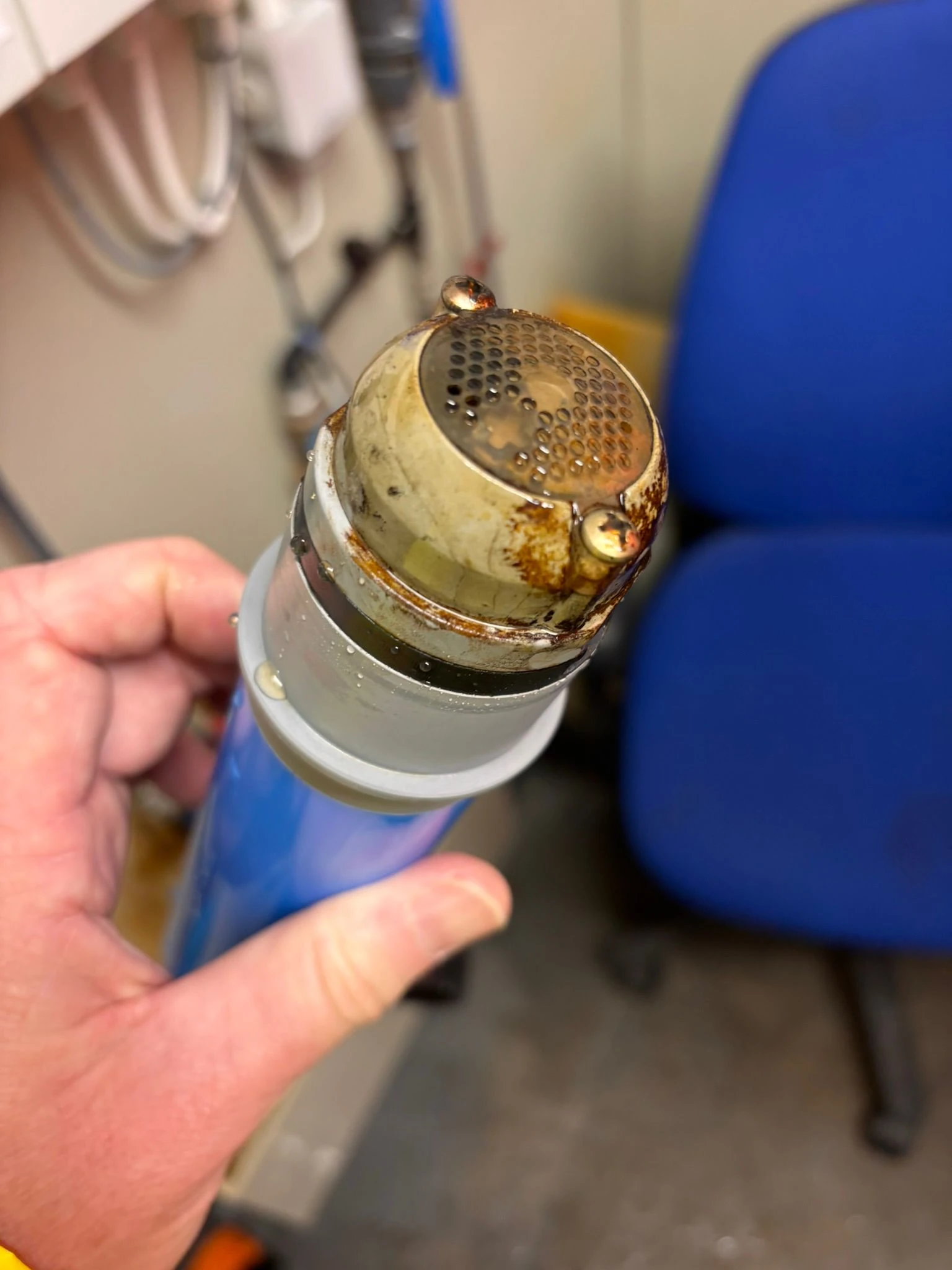
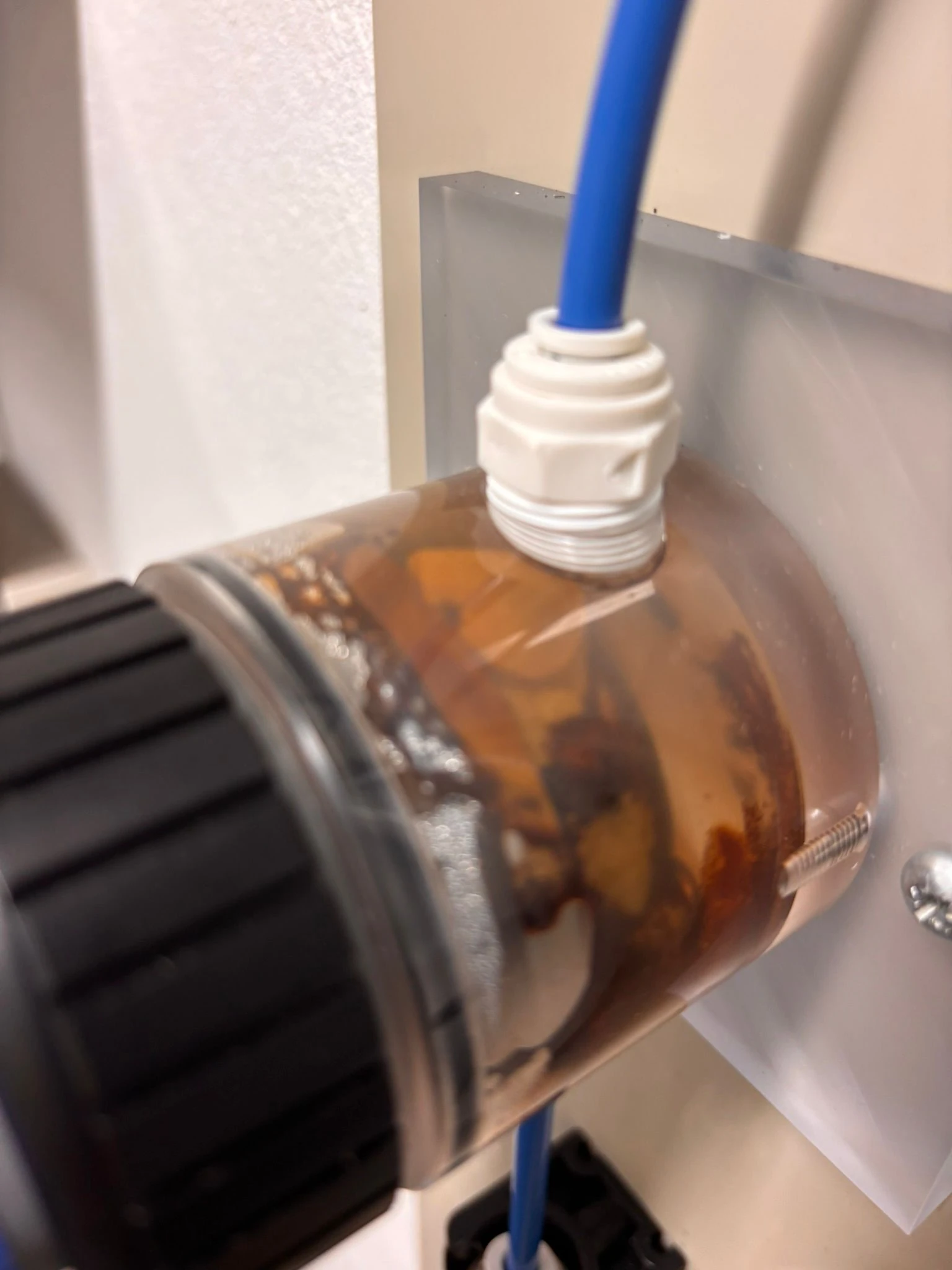
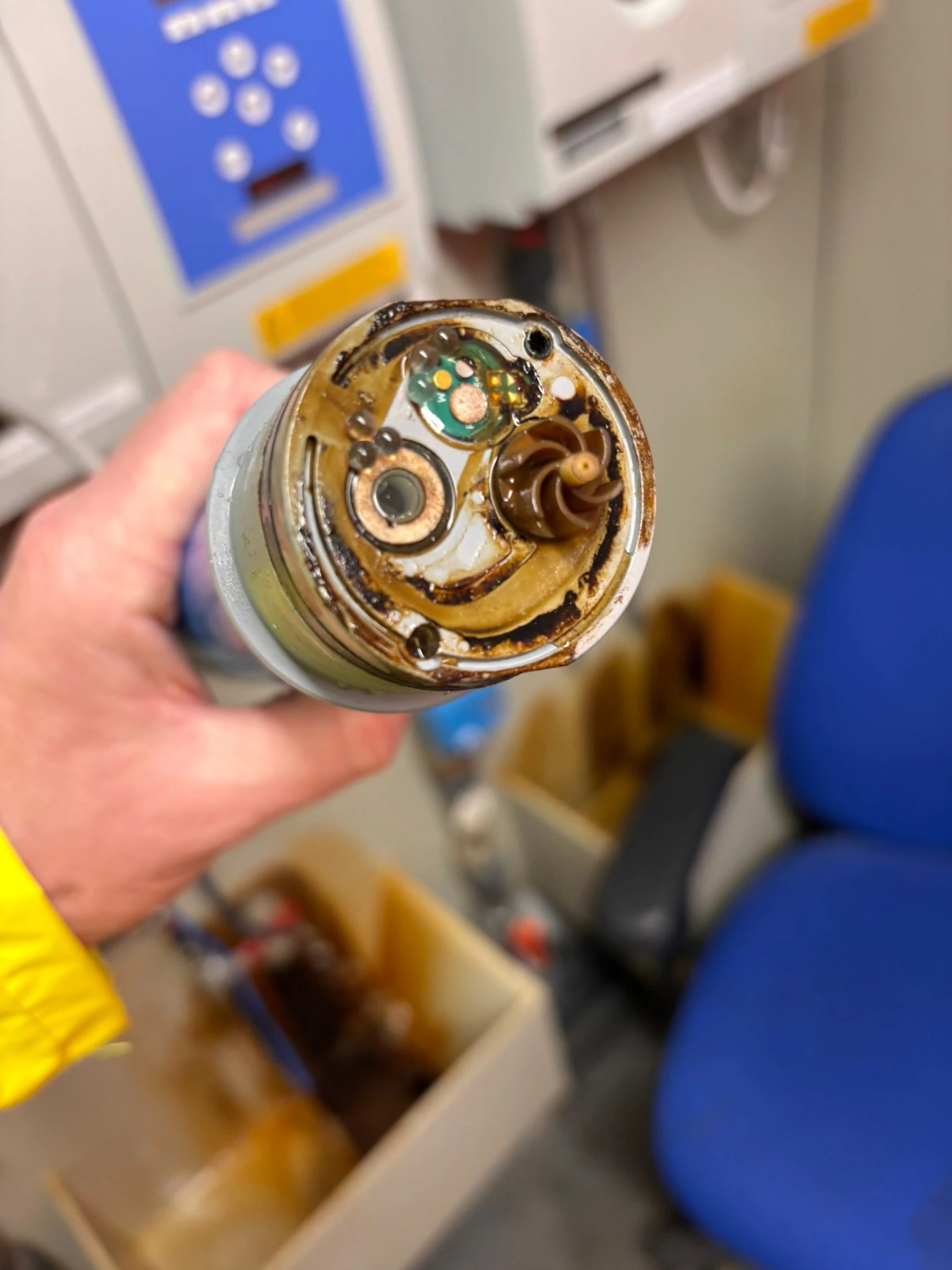
Challenging water leaves its mark.
These are the photographs used in PMA’s published MP5 field-trial account. They show deposits on the outer cap, inside the flow cell and at the sensing end.
Iron staining on the outer capDeposits inside the flow cellSensing end before wiping
Your questions answered.
What is a reagentless chlorine analyser?
It measures chlorine without continuously dosing analytical reagents into the sample. Halogen uses electrochemical sensing with mechanical cleaning and water-chemistry compensation.
What does flow-independent chlorine monitoring mean?
Integral circulation helps control local conditions at the sensing surface when external water flow changes. It remains subject to the selected sensor’s rated chemistry, temperature, pressure and installation limits.
Can a self-cleaning sensor reduce maintenance visits?
It can help reduce work associated with deposits at the sensing surface in a suitable application. Verification, wear parts and other scheduled service tasks remain. A site evaluation is the right basis for comparing the workload.
Technical references.
Read alongside the current documentation for your exact sensor and installation.
Halogen: current free-chlorine sensor and product lineage
Current manufacturer free-chlorine product information. Compare its generation and operating limits with the MP5A guide used on PMA’s MP5 page.
Compare Halogen chlorine sensors for free chlorine and monochloramine monitoring. Review self-cleaning technology, installation and UK support from PMA.
Learn which maintenance and verification tasks remain with a self-cleaning chlorine sensor, and what to ask about cleaning, wear parts and calibration.
Review self-cleaning chlorine monitoring where iron and manganese deposits increase sensor maintenance. Discuss borehole water and site evaluation with PMA.