Inline, immersion or flow cell: choosing a chlorine sensor installation
Compare inline, immersion and flow-cell chlorine monitoring. Consider sample-water waste, zero-flow duties, response, service access and plant integration.
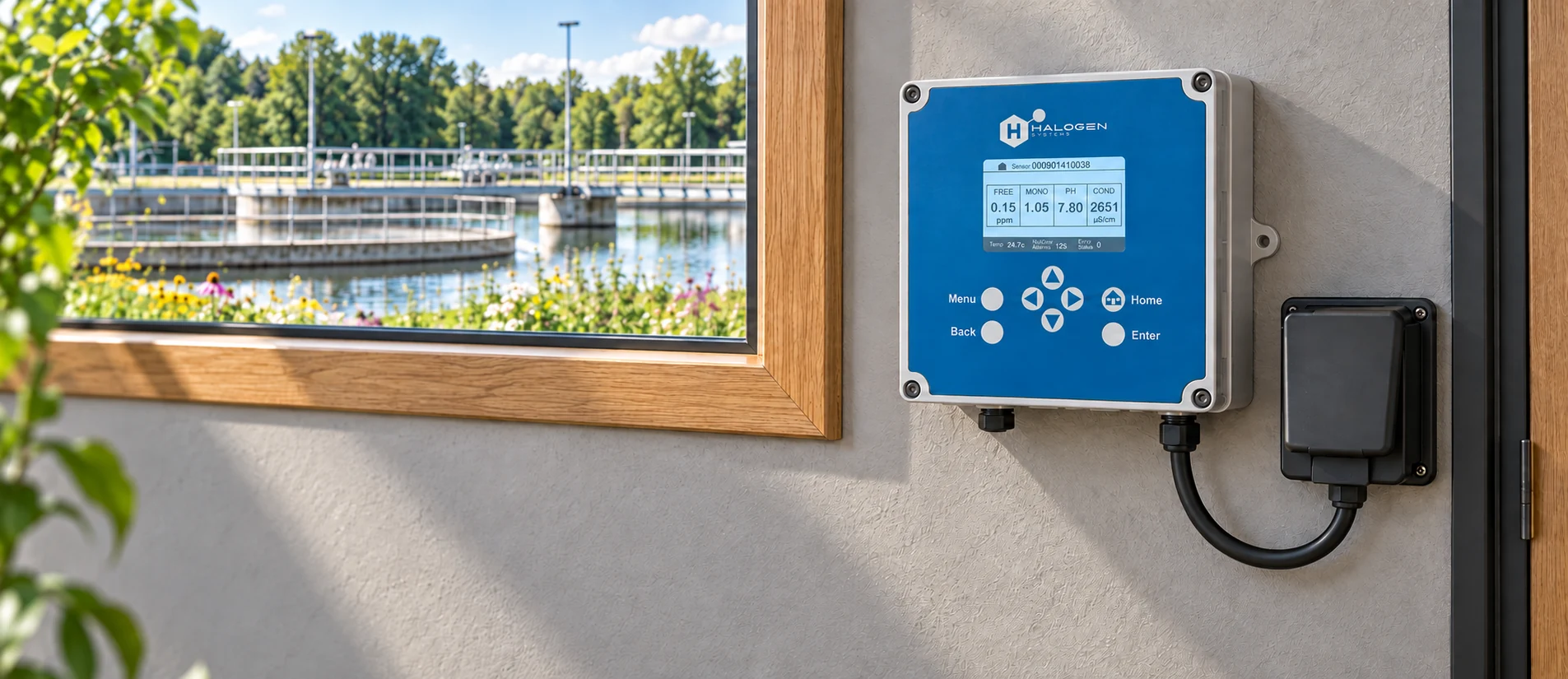
An inline sensor measures in the pipe, an immersion sensor sits in the monitored water, and a flow cell receives a side-stream sample. The right choice depends on the water, monitoring point and service arrangements. Direct measurement can avoid a continuous sample-to-drain stream, but each installation needs its own review.
What is an inline chlorine sensor?
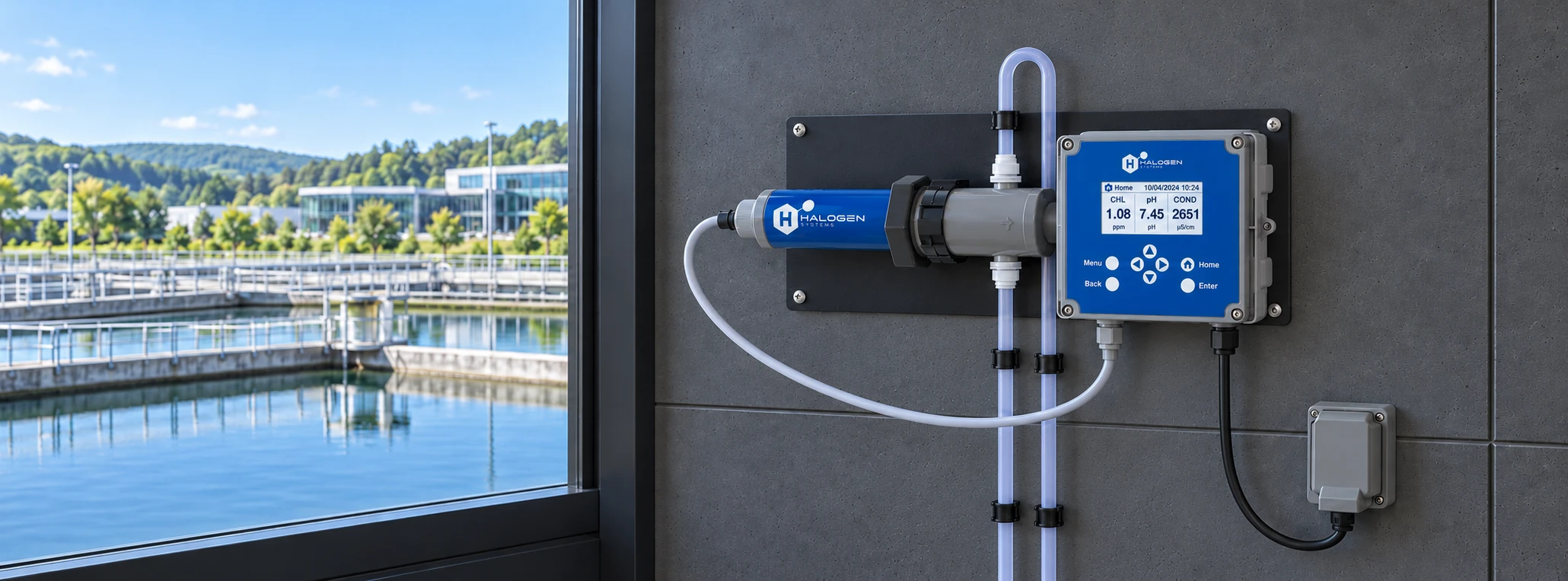
An inline or in-pipe arrangement places the sensing point directly in the process water. Appropriate tee and wet-tap configurations address different connection and servicing needs. The sensor, fittings, seals and isolation arrangements must be compatible with the exact model and site. Direct measurement can remove the need to transport a sample to a separate analyser panel.
When might a flow cell be the practical choice?
A side-stream flow cell can fit an existing sample panel or a retrofit where a suitable water take-off is already available. Review the entire water path: transport to the instrument, representativeness, isolation, reference sampling, drainage and any pump requirement. A reagentless sensor in a flow cell may still use a continuous stream of sample water.
What is an immersion installation?
An immersion arrangement places the sensor in a suitable tank or reservoir monitoring point. The mounting must hold the sensor in the correct position, protect the cable and allow access for checks and service. The location must represent the water the operator needs to assess. Review mixing, turnover and access rather than selecting a point solely because it is easy to reach.
Does flow-independent sensing remove every flow requirement?
No. Halogen’s integral circulation supports suitable zero external-flow and variable-flow applications by managing local conditions near the sensing surfaces. It remains subject to the chosen model’s operating limits. It cannot correct an unrepresentative sample point, unsuitable immersion conditions or an installation outside the permitted pressure, temperature or chemistry envelope.
Which arrangement can reduce sample-water waste?
Appropriate in-pipe and immersion monitoring can avoid a dedicated sample-to-drain stream because the water is measured at the process point. The actual reduction depends on the arrangement being replaced. Review the current sample flow, operating hours and proposed plumbing before estimating a saving. Do not assume that every reagentless installation has no drainage or pumping load.
How does the sample path affect the reading?
A sample transported to a remote panel takes time to reach the sensor, and its condition should remain representative during that journey. Direct measurement reduces that transport path, but the sensor still has its own response characteristics. Sample transport time, measurement update interval and sensor response time describe different things and should be considered separately.
What should you plan for maintenance and integration?
Allow access to the complete mounting and removal arrangement, not only space for the sensor body. Plan appropriate indoor equipment locations, protected electrical connections, cable routes, power and the controller or plant interface. A wet-tap arrangement requires the approved hardware and procedure for the exact installation; this guide is not an insertion or removal instruction.
What information should go into the enquiry?
Share the disinfectant species, expected concentration, water chemistry, normal and limiting temperature and pressure, pipe or tank details, existing sample panel, service access and required data interface. Include whether the result is for monitoring or forms part of a control system. PMA can help bring the sensor, mounting and integration requirements into one specification.