What is a reagentless chlorine analyser?
Understand reagentless chlorine analysers, amperometric measurement and the difference from reagent-based testing. Compare maintenance and installation needs.
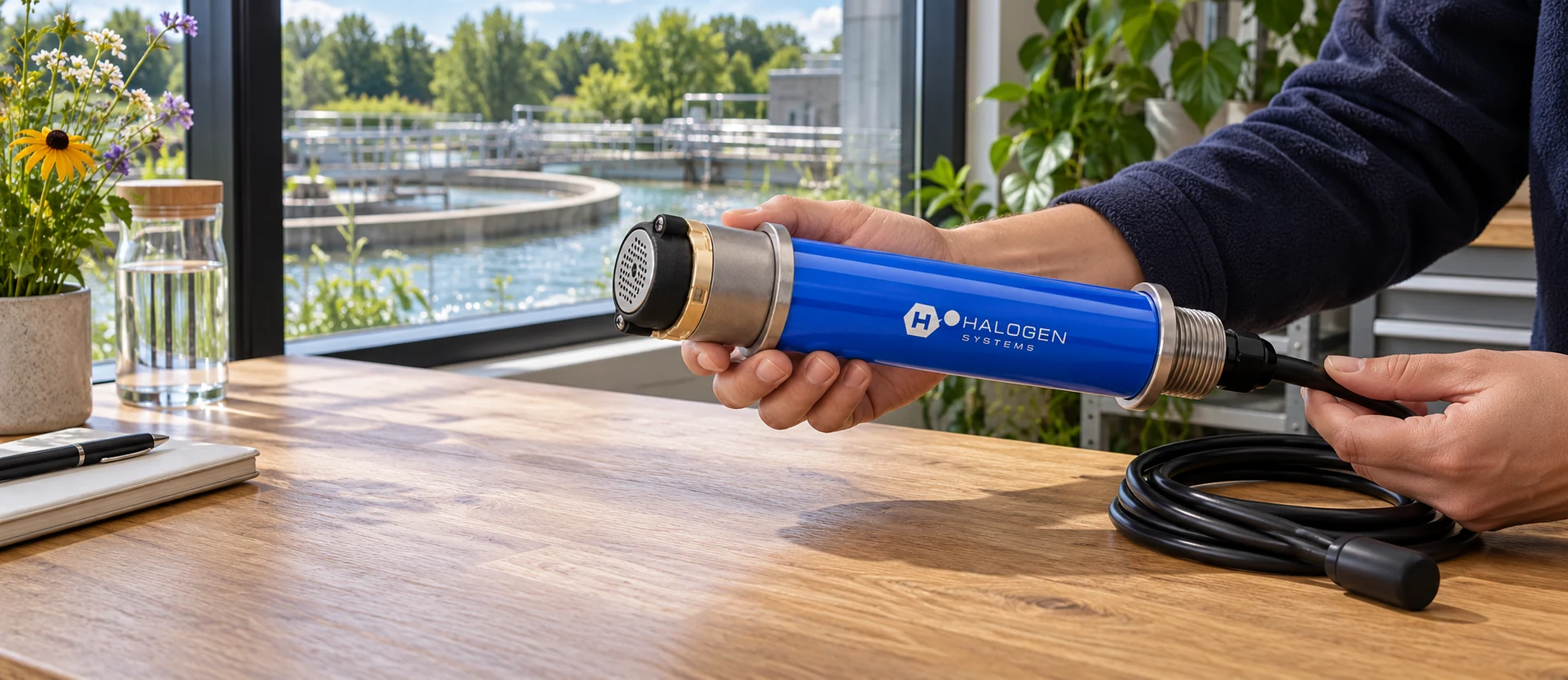
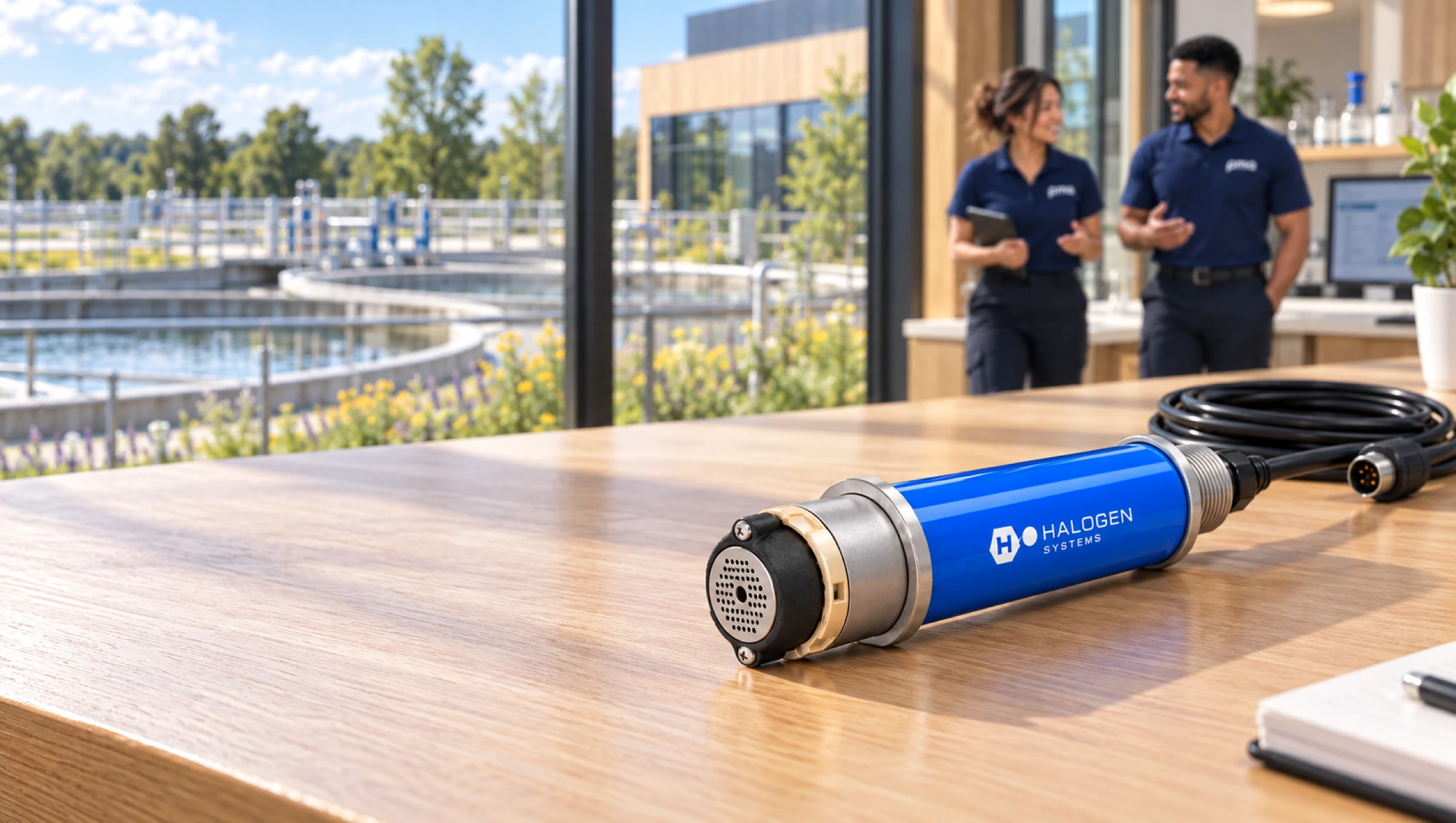
Reagentless chlorine analysers measure the residual without continuously adding analytical reagents to the sample. Halogen uses electrochemical sensing rather than a reagent-fed colour reaction. This changes the consumables and maintenance involved, but it does not remove the need for a representative monitoring point, verification or servicing.
How does a reagentless chlorine analyser work?
An amperometric sensor relates an electrical current at the sensing electrodes to the chlorine concentration. Halogen combines its electrochemical measurement with surface renewal, mechanical cleaning and local circulation. These functions help address the sensing surface and its immediate water conditions. The output still needs to be interpreted within the selected sensor’s operating envelope.
How does it differ from a reagent-based chlorine analyser?
A reagent-based colorimetric analyser develops a colour in the sample and measures the response. A reagentless electrochemical sensor measures a current instead. These are different measurement approaches, not a reason to assume one instrument is appropriate for every water matrix. Compare the required species, measurement limits, sample handling, service tasks and site reference method together.
How does the sensor deal with its surface?
The electrode surface matters because deposits can change the measurement response. Halogen uses pulsed operating potentials to renew the electrochemical surface, alongside mechanical cleaning media and local circulation. These functions work together to help maintain the measurement conditions at the sensor. They should be assessed in the context of the actual water chemistry and the selected model’s operating limits.
Which routine tasks change?
Removing analytical reagents, membranes and electrolyte removes their replenishment and associated handling. Other tasks remain. Cleaning media, seals, wear parts and pH components have their own inspection and replacement requirements. A useful comparison therefore considers the complete maintenance schedule, service access and verification method rather than a single consumable cost.
Can it reduce sample-water loss?
An appropriate direct immersion or in-pipe installation can avoid a continuous sample-to-drain stream. That is a property of the complete installation, not an automatic benefit of every reagentless sensor. A side-stream panel may still have drainage and pumping requirements. Review the proposed sample path before assuming water or energy savings.
What should you compare before specifying?
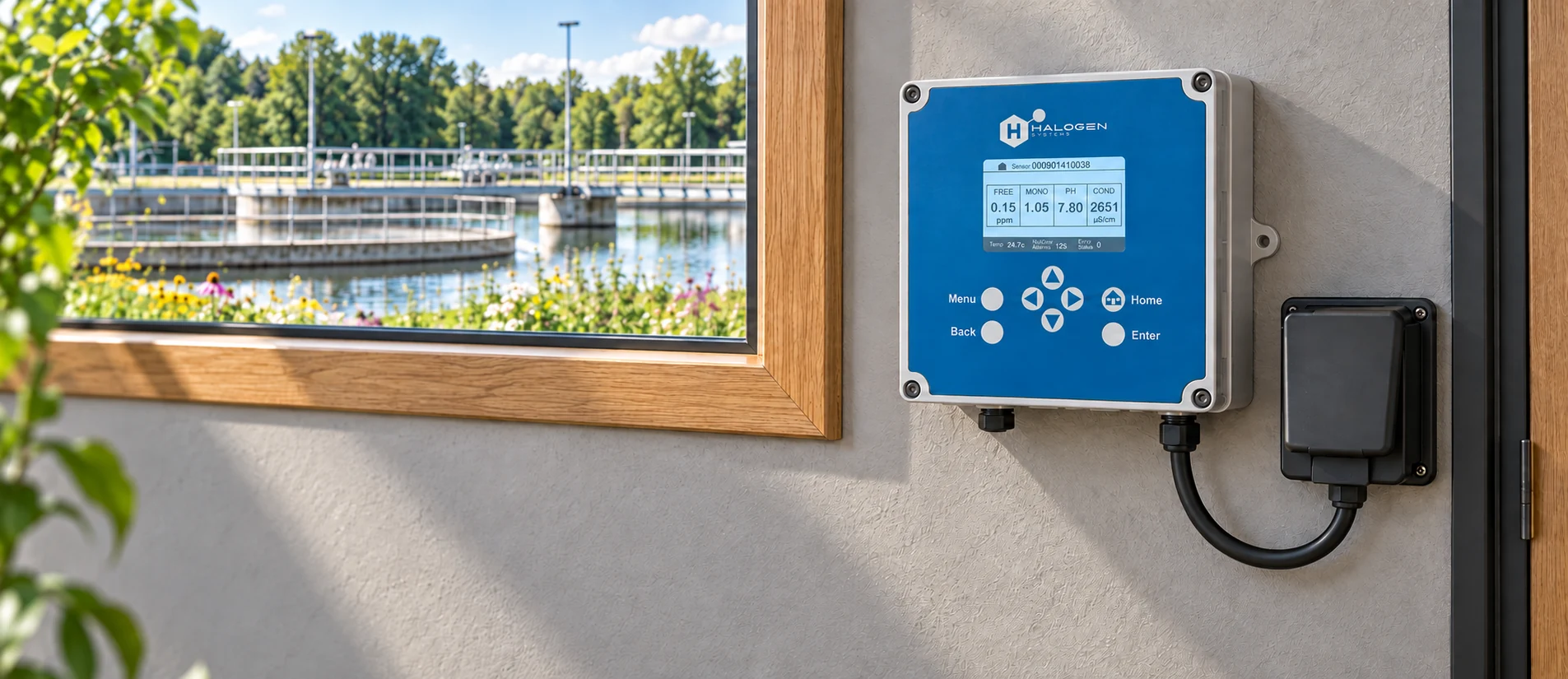
Define the disinfectant species, expected concentration, pH, conductivity, temperature and pressure. Check the sensor’s measurement limits and response characteristics against those conditions. Resolution, accuracy, detection limit and update interval describe different aspects of performance and should remain separate in a comparison. Confirm the current part number and controlling datasheet rather than transferring figures from an older model.
How should a site evaluation work?
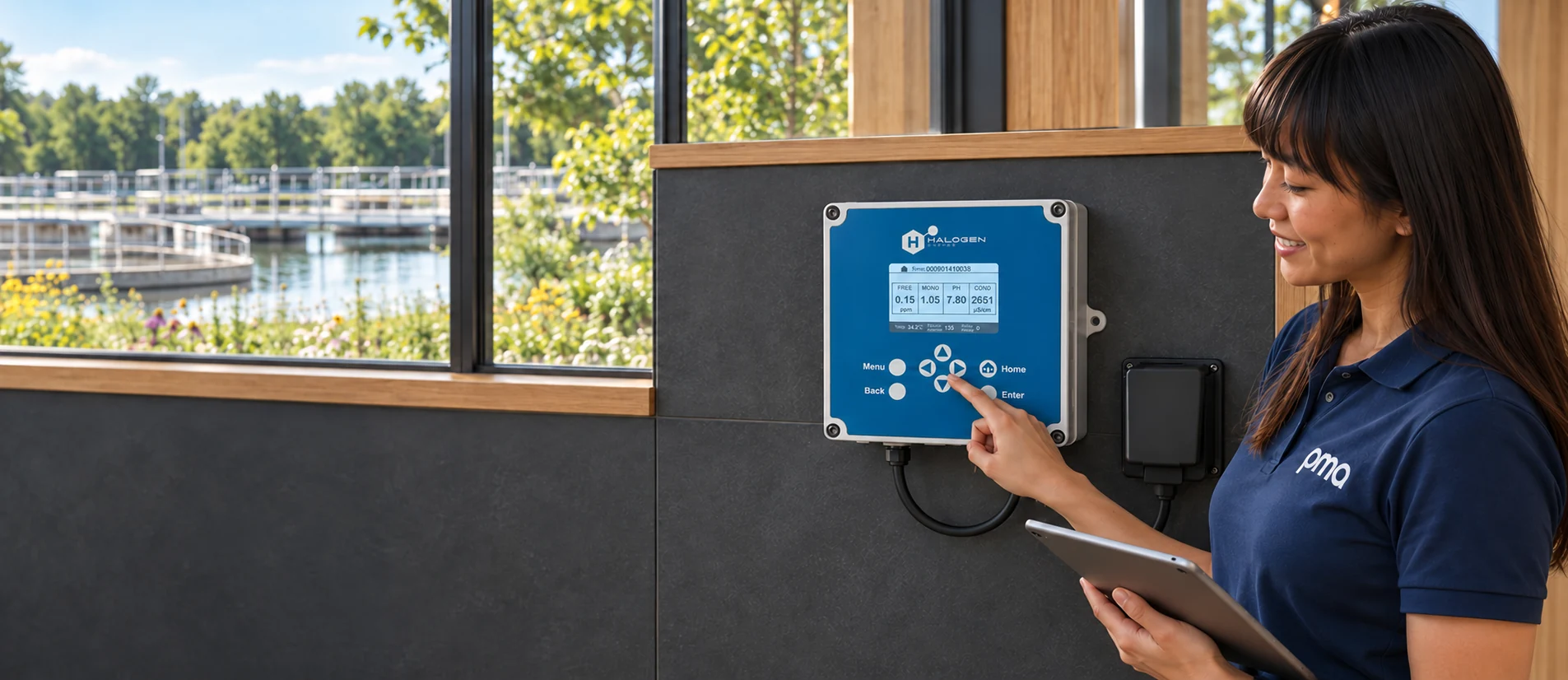
Agree a representative installation point, reference method and verification routine. Record maintenance interventions and operating conditions alongside the readings so that the comparison remains useful. PMA can help scope the information required to review a reagentless sensor for your application. Any savings estimate should use your site’s operating evidence and assumptions.
What is the next step for an existing treatment works?
Start with the duty of the current analyser, not its brand name. Record the disinfectant species, the location of the sample point, the present maintenance routine and the data needed by the control system. PMA can then help assess the appropriate sensor, mounting and controller. Any evaluation should define how readings and maintenance interventions will be compared before it begins.