Does a self-cleaning chlorine sensor need maintenance?
Learn which maintenance and verification tasks remain with a self-cleaning chlorine sensor, and what to ask about cleaning, wear parts and calibration.

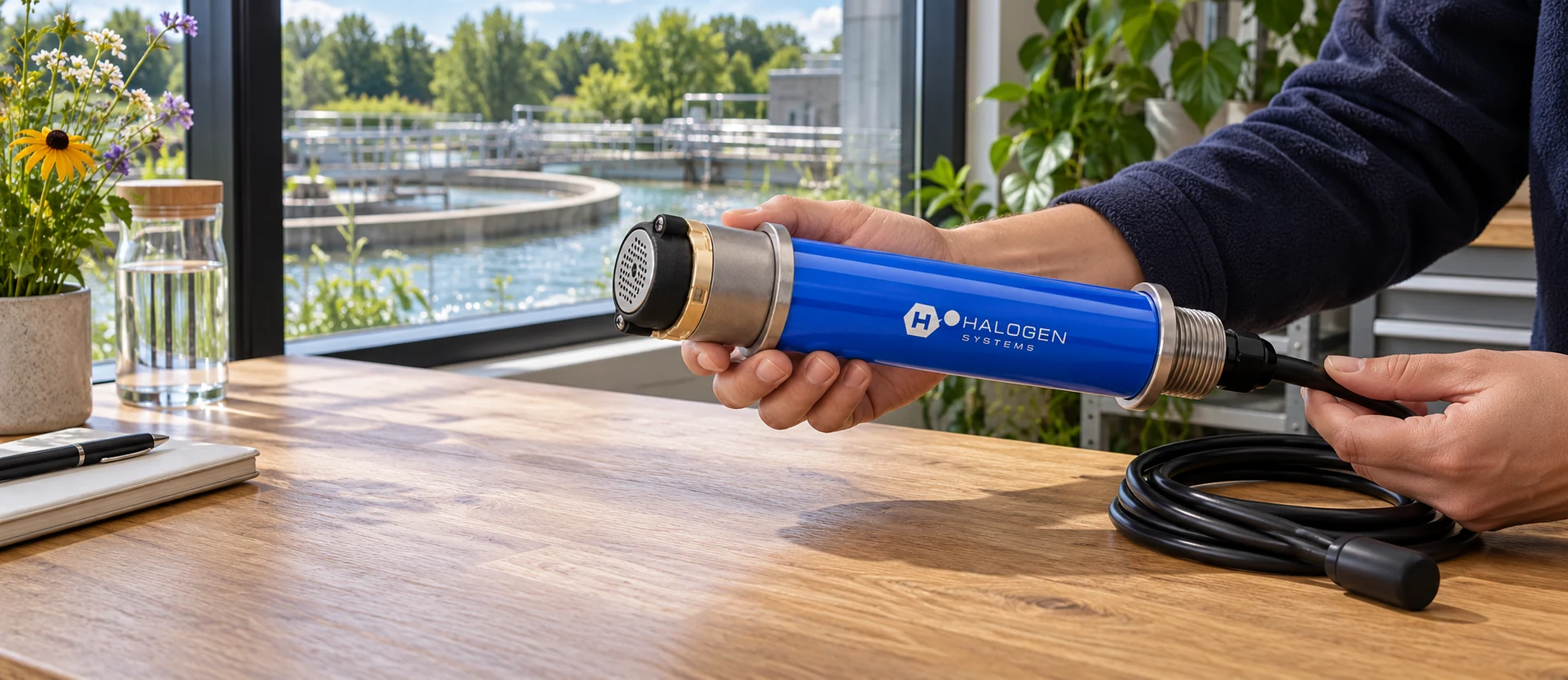
Yes. A self-cleaning chlorine sensor still needs the checks and service specified for its model. Mechanical cleaning can help manage deposits at the sensing surface, while verification, cleaning media, seals and other serviceable parts remain part of instrument ownership. Self-cleaning does not mean maintenance-free.
What self-cleaning addresses
A deposit on the sensing surface can change an electrochemical sensor’s response. Halogen combines mechanical cleaning with electrochemical surface renewal to help manage this problem. The practical aim is a more consistent surface condition and fewer fouling-related interventions where the application suits the sensor. That is different from promising no maintenance under every water condition.
What still needs attention
The sensor remains a serviceable instrument. Cleaning media, wear parts, seals, tubing and pH components have defined checks or replacement requirements in the relevant documentation. The exact schedule varies with model generation and conditions. An older manual or an abbreviated sales description should not replace the current schedule for the part being supplied.
How should a chlorine sensor be checked against a reference?
Use the reference method and sampling arrangements agreed for the installation. Take a representative sample and compare readings under suitable, stable operating conditions. If the results differ, review the sample, method, water conditions and sensor condition before deciding whether a calibration adjustment is appropriate. The detailed procedure and acceptance criteria belong in the applicable operating instructions and site plan.
Calibration stability and verification are different
A typical calibration-stability statement is not a guaranteed period without checks. Site verification compares the installed reading with an appropriate reference under the actual operating conditions. Agree the reference method, acceptance criteria and check frequency as part of commissioning, and keep those separate from routine cleaning and component replacement.
What changes in iron- or manganese-bearing water?
Deposits may increase the effort needed to keep a sensor’s response consistent. Self-cleaning addresses the sensing surface, but it does not remove the material from the water or guarantee the same service interval at every site. Record water chemistry, inspections and interventions during an evaluation so that the maintenance comparison reflects the actual duty.
Why installation affects the workload
Access, sample representativeness, isolation and cable routing all influence service work. A sensor that is difficult to reach or remove can turn a small intervention into a substantial task. Compare the complete flow-cell, wet-tap or immersion arrangement and plan safe service access alongside the measurement requirements.
Record the site evidence
When evaluating a sensor, record reference results, cleaning, adjustments, component changes and relevant water conditions. An instrument that needs fewer interventions may offer practical value, but the evidence should distinguish reduced cleaning from reduced calibration or a change in the dosing process. Avoid presenting an observed monitoring discrepancy as a proven saving.
Questions to ask before ordering
Ask for the current maintenance schedule, expected wear parts, reference-check procedure and service options for the exact sensor. Share your water chemistry and existing maintenance history with PMA. That helps set realistic expectations for the installation and gives the evaluation a clear basis for comparison.
Build a service plan for the complete installation
Include the sensor’s serviceable components, the mounting arrangement, isolation, the reference-check point, controller configuration and access requirements. Ask PMA for the current documentation and parts information for the exact unit. A clear service plan is more useful than a general promise about how long any chlorine sensor can run unattended.